Urban Renewal: A Basic Definition
Urban renewal is defined as the set of programs and plans meant to bring about the revitalization of sections within a city that have been deemed ailing, deteriorating, or outmoded. The ultimate goal usually is to add to the infrastructure, attract investment, and make cities more functional overall.
Why Cities Use Urban Renewal Programs
Cities adopt urban renewal strategies for several reasons. In some cases, older infrastructure may no longer meet modern standards, requiring large-scale updates. In others, local governments aim to stimulate economic activity by attracting businesses or increasing property values.
Urban renewal is, therefore, also somewhat related to changes in population or, more broadly, how people occupy the spaces in a town or city. An illustration of this would be the conversion of old industrial zones into residential or mixed-use developments in a situation where cities are becoming service-oriented. Often these changes are strategic and grounded in their long-term frameworks than being single opportunities.
Key Concepts in Urban Planning and Redevelopment
Urban renewal is closely connected to the broader tools of planning and legal architecture; an understanding of these helps clarify how redevelopment projects are structured and approved.
Eminent Domain and Property Acquisition
Eminent domain is a legal process that allows governments to acquire private property for public use. In the context of urban renewal, it is sometimes used to assemble land for large-scale redevelopment projects.
Property owners are typically compensated, but the use of eminent domain remains controversial. Critics argue that it can lead to displacement, especially in lower-income communities, while supporters claim it is necessary for projects that benefit the broader public, such as infrastructure improvements or public facilities.
Zoning and Land Use Regulation
Zoning is a fundamental tool in city planning. It divides land into designated areas, such as residential, commercial, or industrial zones. Each zone has specific rules about what can be built and how properties can be used.
Zoning laws shape the physical layout of a city and play a major role in urban renewal projects. For example, a city may rezone an area from industrial to residential use to support redevelopment. While zoning provides structure and predictability, changes to zoning rules can significantly alter neighborhoods and affect property values.
The Urban Renewal Process Step by Step
Urban renewal is not a single action but a multi-phased process generated by the actors at different levels. Each level comprises its own stakeholders from planners to policymakers, from citizens to landowners.
Planning and Assessment
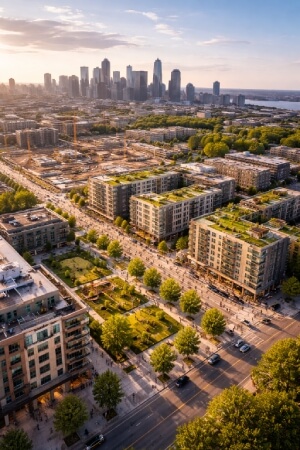
The process usually begins with identifying areas targeted for redevelopment. This involves assessing factors such as building conditions, infrastructure quality, economic activity, and population trends.
City planners may conduct studies, gather data, and consult with stakeholders to determine whether intervention is needed. At this stage, goals are defined, such as improving housing quality, increasing commercial activity, or upgrading transportation networks.
Design and Approval
Once a plan is proposed, it moves into the design and approval phase. This includes creating detailed development plans, reviewing zoning requirements, and obtaining necessary permits.
Public consultations may also take place, allowing residents to provide input or raise concerns. However, the level of community involvement can vary depending on local regulations and governance structures.
Implementation and Construction
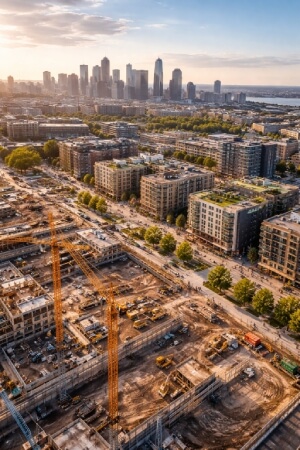
After approval, the project enters the implementation phase. This may involve clearing existing structures, relocating residents, and beginning construction.
The timeline can range from a few years to several decades, depending on the scale of the project. During this phase, the visible transformation of the area takes place, often significantly altering its physical and social landscape.
Post-Development Outcomes
The final stage focuses on the long-term effects of urban renewal. This includes evaluating whether the project achieved its goals and how it impacted the local community.
Outcomes may include increased property values, new business activity, and improved infrastructure. At the same time, there may be unintended consequences, such as displacement or changes in community identity. These outcomes are central to ongoing debates about urban renewal policies.
Examples of Urban Renewal in Practice
Many different ways have been followed to rejuvenate the distressed city quarters. On this note, discussing several cases does illustrate how urban renewal works and what impacts it has.
Linnentown and Displacement in Athens, Georgia
One often-cited example is Linnentown, a historically Black neighborhood that was redeveloped during the 1960s. The area was cleared as part of an urban renewal project tied to expansion by nearby institutions.
Residents were displaced, and many were not able to return after redevelopment. The case of Linnentown is frequently discussed in relation to the social impact of urban renewal, particularly the role of policy decisions in shaping outcomes for marginalized communities.
Downtown Redevelopment in Detroit
In contrast, parts of downtown Detroit have undergone redevelopment aimed at economic revitalization. Projects have focused on attracting businesses, renovating buildings, and improving public spaces.
While these efforts have contributed to increased investment and activity, they have also raised questions about affordability and inclusivity. The balance between growth and accessibility remains a key issue in evaluating these projects.
Understanding Change in Urban Spaces
Urban renewal - the process in which a city is constantly adjusting to different demands and priorities-is a multifarious task that involves a series of planning tools, legal frameworks, and economic forces, which, in turn, are the final determinants for the resultant project.
When one understands the legal framework that provides storage for terms like 'zoning,' 'eminent domain,' and 'redevelopment processes,' it becomes easier to postulate on advantages and accessibility issues which come with city renewal. Each project has its distinct context, and considering examples upon examples from all directions constitutes the other side of the same coin concerning how cities grow over time.
UMUAHIA URBAN RENEWAL AND BEAUTIFICATION CONTINUES BY ABSG
— New Abia (@GreatAbia) March 24, 2026
The Commissioner of Information, Prince Okey Kanu, has stated that the state government has thought it wise to install speed bumps on some of the newly constructed roads, roadside tree planting, landscaping of designated pic.twitter.com/Wf7orqHXtd
Undoing the damage of sweeping mid-century urban renewal on the near south side really ought to be a goal of this city. And I don't think mega projects are the answer here... https://t.co/m8bWFFA4Dd pic.twitter.com/TYV7dHkDCr
— Midwest Antiquarian (@Eric_Erins) April 2, 2026